What’s Really in That Bag of Kibble? The Numbers Will Shock You.
My regular readers know I advocate for a nutritionally complete, fresh food diet. Kibble (dry) food has not been my home for over 30 years, let alone in my dogs’ bowls. If you need more encouragement to switch from kibble, here it is. And I need you to sit down for this one.
The Clean Label Project just released a bombshell study on dog food contamination, and the findings are exactly the kind of thing I’ve been concerned about for years. They purchased and tested 79 of the top-selling dry, air-dried, freeze-dried, and fresh/frozen dog foods, generating over 11,376 individual data points in an ISO-accredited laboratory. This is serious, rigorous science — not a pet food company’s own marketing research.
What they found in that dry kibble your dog is eating every single day? Lead. Arsenic. Cadmium. Mercury. A plastic chemical. And a probable carcinogen. (Note – read to the end to get to a link to the original research, including tested products).
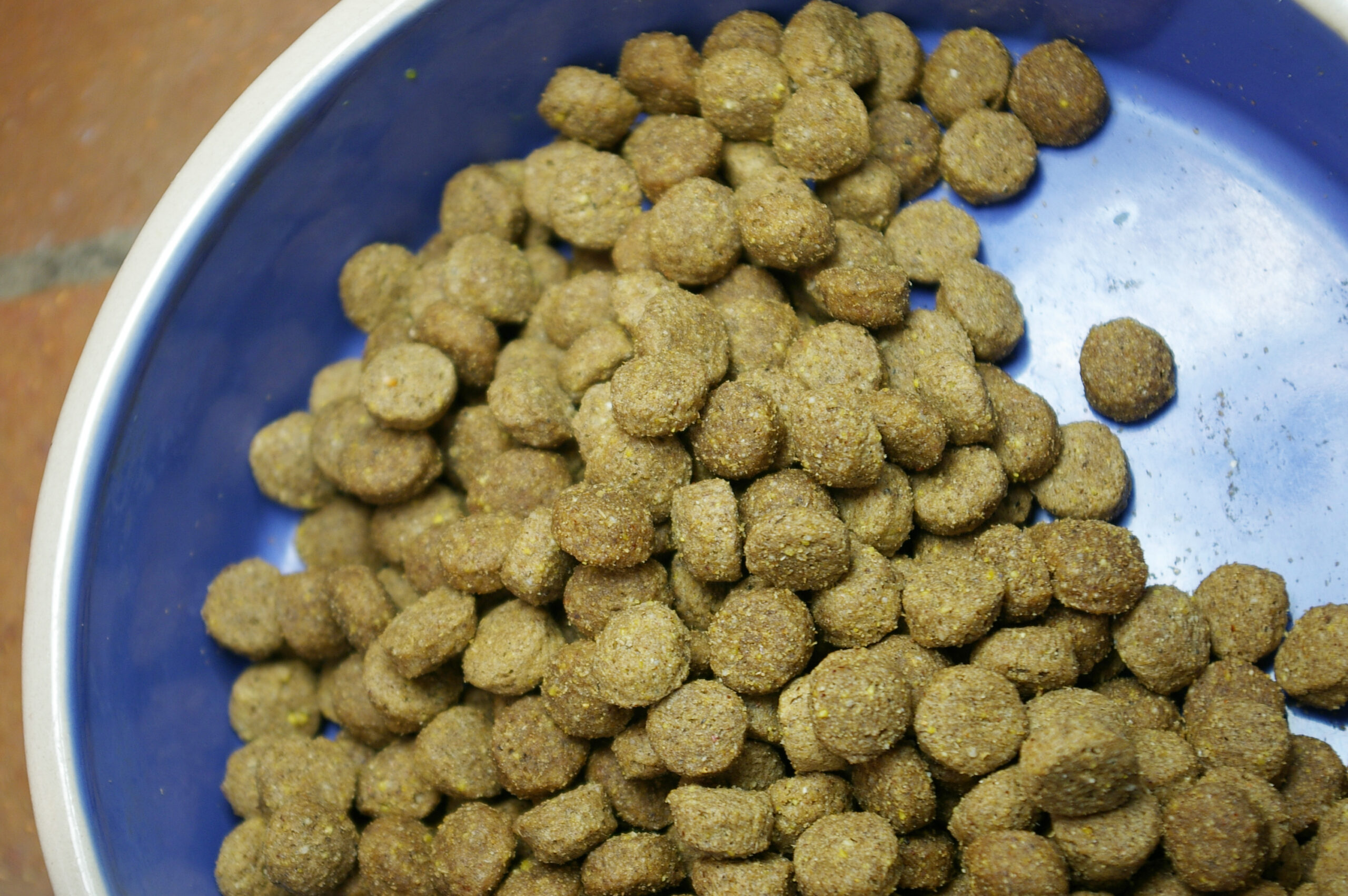
The amounts are scary.
The Lead Finding Is Staggering
The average lead level across dry dog food samples was 180.1 ppb (parts per billion). The single highest sample? 1,576.5 ppb.
To put that in perspective: the EPA’s action level for lead in drinking water — the threshold at which they require remediation — is 15 ppb. The average dry dog food in this study was 12 times that limit. The worst offender was over 100 times the threshold set to protect humans from lead in water.
Your dog isn’t drinking this contaminated water occasionally. They’re eating this food multiple times a day, every day, for their entire life.
Arsenic: Exceeding Limits Set for Baby Food
The average arsenic level in dry dog food was 184.6 ppb.
For comparison, the FDA has set an action level for inorganic arsenic in infant rice cereal — a product consumed by babies — at 100 ppb. The average dry dog food in this study exceeded the safety limit for infant food.
The highest single arsenic sample clocked in at 785.7 ppb. Nearly 8 times the baby food threshold. Again, imagine ingesting this every day, every meal.
Cadmium: A Known Carcinogen, Quietly Accumulating
Cadmium averaged 68.5 ppb in dry dog food — 3.2 times higher than the average found in human consumable products. The highest single sample hit 246.1 ppb.
Cadmium is classified as a known human carcinogen (Group 1) by the International Agency for Research on Cancer. It accumulates primarily in the kidneys. There is no safe level of exposure. And your dog’s kibble contains, on average, more than three times what’s in the food you eat.
Mercury: A Neurotoxin, 2.7x Human Food Levels
Mercury averaged 3.8 ppb in dry dog food, with a peak sample of 55.3 ppb. That’s 2.7 times the level found in average human food products. Mercury is a well-established neurotoxin — no safe exposure level has been identified by health authorities.
But Here’s What Really Opened My Eyes: The Fresh/Frozen Comparison
If the comparisons to human food or drinking water limits don’t hit home, this one will.
When the study compared dry dog food to fresh/frozen dog food, the results were almost unbelievable:
- Lead: Dry kibble had 21 times more lead than fresh/frozen dog food
- Mercury: Dry kibble had 20.7 times more mercury
- Arsenic: Dry kibble had 13.3 times more arsenic
- Cadmium: Dry kibble had 6 times more cadmium
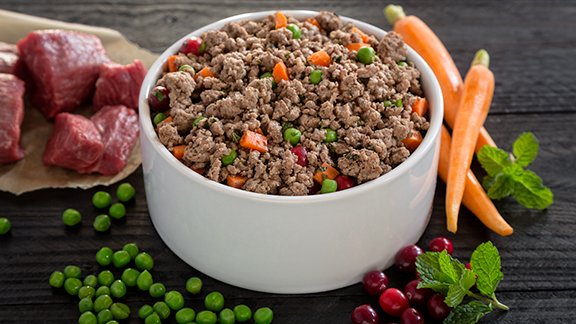
And fresh/frozen dog food? It actually tested lower in contaminants than the average human consumable product. So the problem isn’t dogs eating food — it’s dogs eating ultra- processed, heat-treated kibble.
It Doesn’t Stop at Heavy Metal
Beyond the four heavy metals, the study also tested for two other concerning contaminants:
DEHP (a phthalate — a plasticizer linked to hormone disruption). Dry dog food averaged 53.5 ppb, with the highest sample at 570 ppb. That’s 10.8 times more than fresh/frozen dog food. DEHP is classified by the EPA as a probable human carcinogen and is a known endocrine disruptor — meaning it interferes with hormonal systems.
Acrylamide. This is a compound that forms naturally when starchy foods are cooked at high temperatures — exactly how kibble is made. The average acrylamide level in dry dog food was 48.3 ppb, with the highest sample at a striking 780 ppb. That’s 24 times higher than fresh/frozen dog food. Acrylamide is classified as a probable human carcinogen (Group 2A) by IARC.
When we’re talking about a food your dog consumes in large quantities, day after day, these numbers matter.
Where Is It All Coming From
The study identified three likely culprits that combine to drive contamination levels up in dry kibble:
Meat by-products. This is the biggie. By-products are the organ meats — livers, lungs, kidneys, spleens, bones — left after the cuts used for human consumption are removed. Heavy metals naturally concentrate in organs and bones far more than in muscle meat. When these are rendered into meal and added to dry dog food, those metals come along for the ride.
Vitamin and mineral premixes. Every dry dog food is fortified with a vitamin/mineral premix to hit the nutritional targets on the label. The problem is that minerals, by their very nature, can contain or introduce trace metals. Supply chain complexity — where ingredients change hands multiple times before ending up in the final product — makes traceability and quality control difficult.
Seafood and plant-based carbohydrates. Seafood ingredients bring mercury. Grains and root vegetables like rice can accumulate arsenic from the soil in which they’re grown. When all three of these ingredient categories combine in a single product, the cumulative effect is substantial.
Any one of these might contribute minimally on its own. Stack all three together in the typical dry kibble formulation, and you have a recipe for the numbers this study found.
The Regulatory Gap Nobody Is Talking About
Here’s what makes this completely frustrating: there are no comprehensive federal regulations addressing heavy metals or industrial chemical contamination in dog food. Zero.
The FDA has set a 100 ppb action level for arsenic in infant rice cereal. The EPA has a 15 ppb action level for lead in drinking water. But the equivalent standards for dog food? They don’t exist. Regulations for pet food focus primarily on microbiological hazards — not the chemical contamination documented in this study.
Your dog has no regulatory safety net. The bag of kibble on your shelf has not been evaluated against any federal threshold for lead, arsenic, cadmium, or mercury. This isn’t a matter of a few products failing to meet standards — there are no standards for them to fail.
This is exactly the kind of gap that independent testing organizations like Clean Label Project exist to fill.
So What Should You Do?
The good news — and there genuinely is good news here — is that fresh/frozen dog food consistently came in below human food safety benchmarks across every contaminant measured. This isn’t a minor difference. It’s a 21-fold reduction in lead. It’s a 20-fold reduction in mercury.
That said, I understand fresh and frozen isn’t always practical or affordable for every dog owner. Here’s how I’d think about this:
If you’re feeding dry kibble: Be a label reader. Look for foods that don’t rely heavily on meat by-products (they’ll be listed as “chicken by-product meal,” “beef by-product meal,” etc.) as a primary ingredient. Minimize how much of your dog’s diet is comprised of unnamed by-products.
Consider reducing kibble and adding fresh food. Even replacing a portion of the daily meal with whole, fresh ingredients can reduce cumulative exposure. Lightly cooked muscle meat, eggs, and fibrous vegetables are great toppers. A commercial fresh food product replacing part of the kibble is also a good option.
Use the free contamination predictor tool that Clean Label Project built — the largest known dog food ingredient and contaminant database in the world. You can enter your dog’s current food ingredients and get a machine-learning-powered prediction of likely contamination levels: https://ea-pet-food-predictor.vercel.app/
Consider testing. VDI Labs offers high quality, validated hair testing, which includes both nutritional minerals and toxins. Click here to learn more.
The Bottom Line
We’ve known for a long time that highly processed, heat-treated, high starch kibble is not the optimal food for dogs. Now we have data showing it’s not just suboptimal — in many cases, it contains heavy metals and industrial chemicals at levels that would be unacceptable in human food or infant products. And when you consider these products being fed every day for years you have a perfect storm for toxic accumulation.
Your dog can’t read a label or advocate for themselves. That’s our job as their owners. Studies like this one from Clean Label Project are exactly why independent testing matters, and why food choice — for our dogs as much as for ourselves — is one of the most powerful health decisions we can make.
As always, feel free to share your thoughts and questions on my Facebook page.
Want to talk through your dog’s specific diet or other challenges?? Check out the options I offer on the Consultation page.
Source: Clean Label Project Dog Food Category Report, 2026. Testing conducted in collaboration with Ellipse Analytics, an ISO 17025-accredited analytical chemistry laboratory. Full study available at https://cleanlabelproject.org/dog-food-study/, including tested products.