Why Human Quality is My First Rule
Human quality food, or more correctly stated, fit for human consumption, is my first rule for what goes into my dogs’ bowls. Yet many people argue that non-human quality is just fine, especially given all the things dogs eat with no problem. My first response is, “Is good enough something you want to feed your dog?” Why would anyone feed something lesser, let alone rely on it for daily nutrition? Given that most dogs (and cats for that matter) eat the same thing every day for years, shouldn’t we be super concerned about the quality of those ingredients?
We know the higher the quality of food we eat, the better it is for us. Organic, pesticide free, pasture-raised, hormone-free, non-GMO foods often have more nutrients such as omega 3 fatty acids or vitamins, and of course contain fewer toxins. But when it comes to pet foods, it goes a bit farther than that.
The pet food industry has a history of misrepresenting what is in the bag. From the pictures of steak or chicken breast to colorful whole vegetables and blueberries, what goes into those brown nuggets of kibble is far different. Click here to view a page from a meat meal supplier.
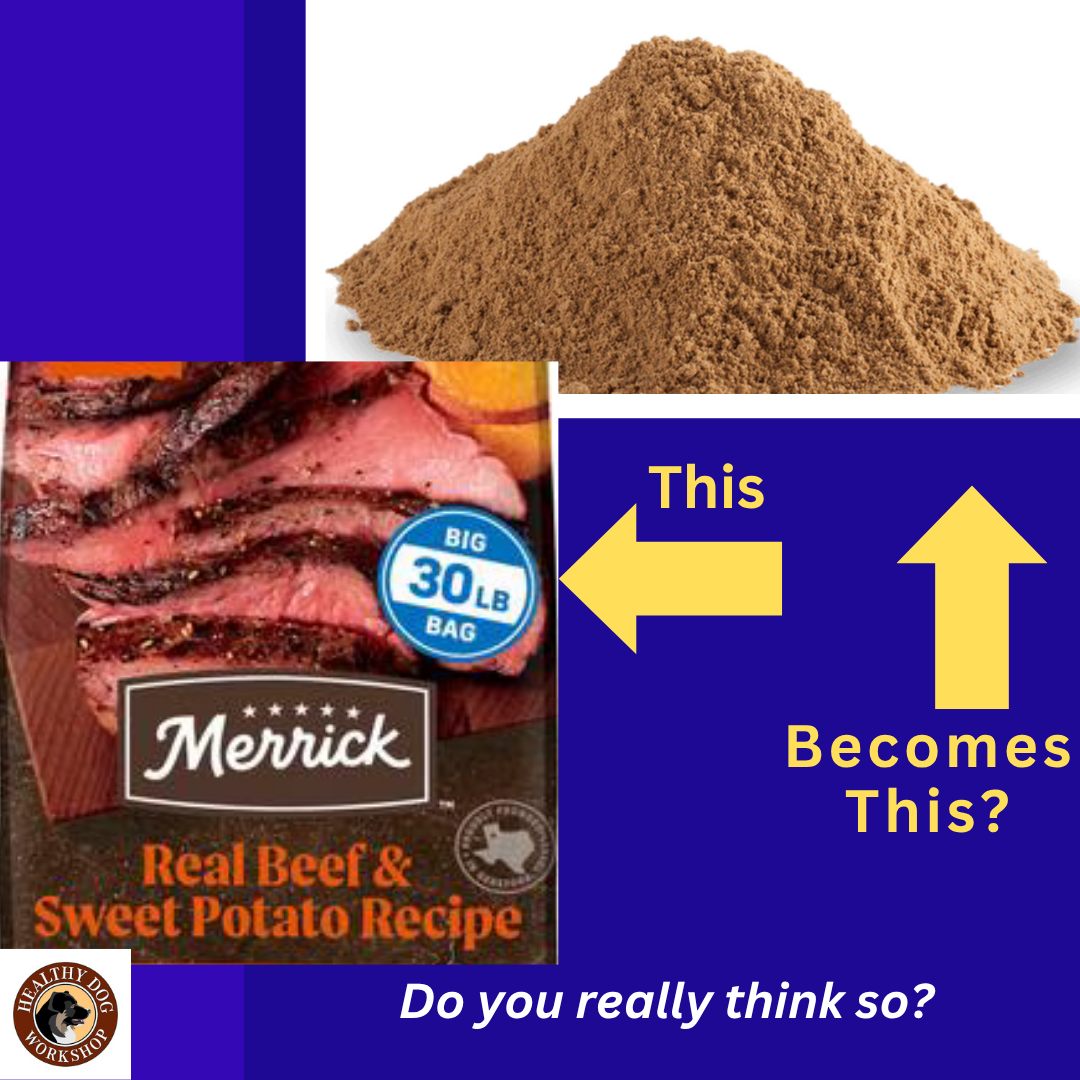
But the problem goes beyond the pictures on the package. It goes all the way to downright deception, which of course, comes out in lawsuits. The pet food industry has a long history of lying about their products. Take the multi-year battle between Purina and Blue Buffalo, in which Purina alleged that Blue Buffalo was using by-product meals, which was contrary to their “True Blue Promise” which stated they used no by-product meals in their products. Blue Buffalo settled the subsequent class action suits for $32 million, the largest settlement of the time. While they admit no wrongdoing, they did not recall or relabel any products.
Next, consider the problem of pentobarbital, the drugs used to euthanize animals. Of course, animals intended for human consumption are not administered pentobarbital. So how in the world does it get into pet food??? The premier case of this was a product called “Hunk of Beef” made by Evanger’s Pet Food. See the warning letter to the company from FDA here. The consumer who first reported the problem had four dogs become sick after eating the product, and one of them died.
But that’s not the only case of pentobarbital winding up in pet food. Pet Food Industry magazine reported FDA recalls on brands including Kibbles and Bits, Ol’ Roy, Gravy Train, and Skippy. And Valley Proteins, now called Darling Ingredients, a very large rendered plant that produces various ingredients for many pet food companies, was also found to have pentobarbital contamination. See the details here.
Sadly, this has been going on for many years. Watch this older video from the then president of AAFCO:
As if this problem is not bad enough, there is another one – truth in labelling. This was made evident by a class action suit against a former Rachel Ray dog food, Just 6 Limited Ingredient Lamb and Rice.
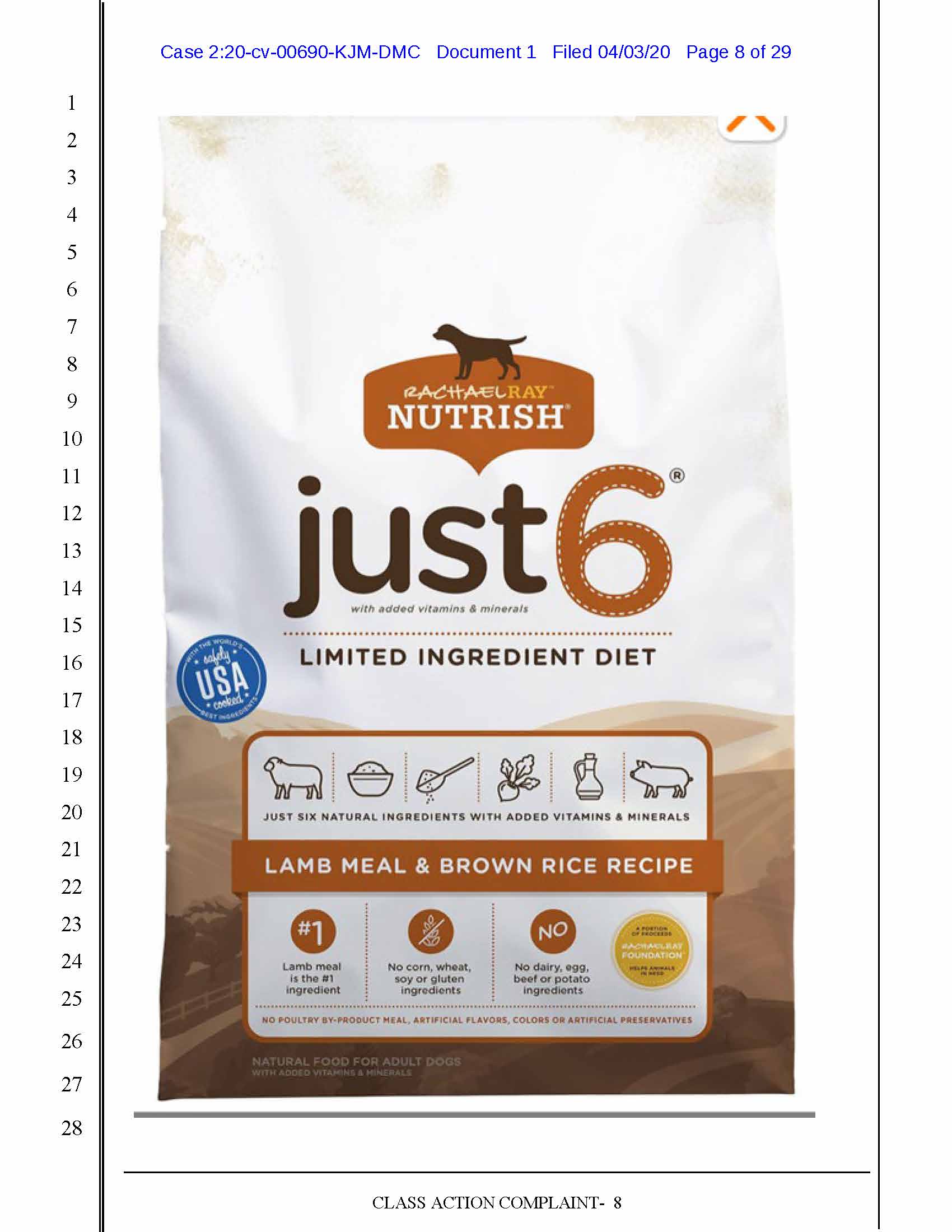
The lead consumer in the suit had purchased the product for her dogs, that was lamb based and contained no grains other than rice. The ingredients listed on the bag were: Lamb meal, brown rice, ground rice, dried plain beet pulp, chicken fat, natural pork flavor, and vitamins and mineral premix.
The consumer discovered that the food was not true to its label, and a class action suit was filed. In the course of that suit, DNA testing was conducted at the University of New Mexico to determine exactly what ingredients the product contained and in what amounts. I found the results, at the very least, to be mind boggling. See for yourself:
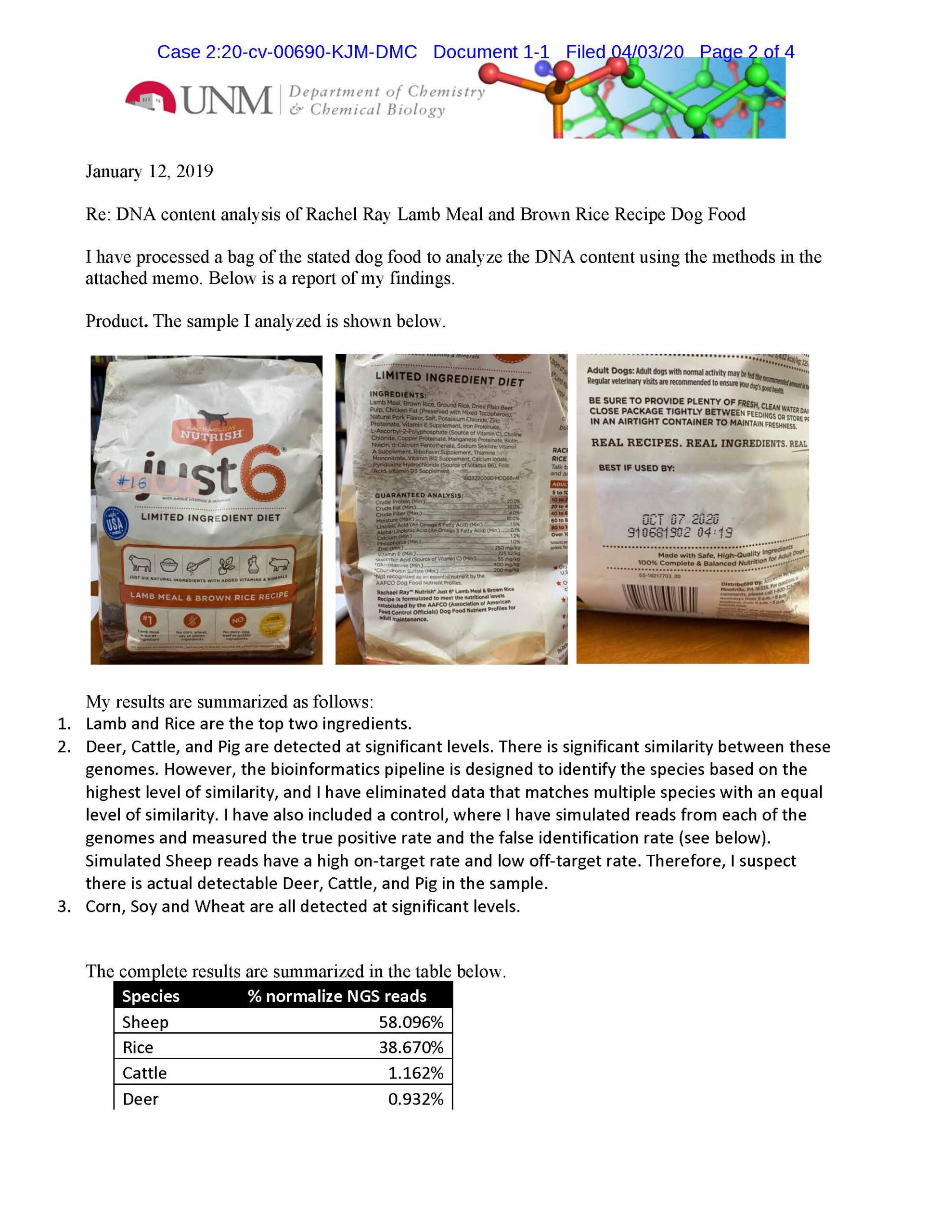
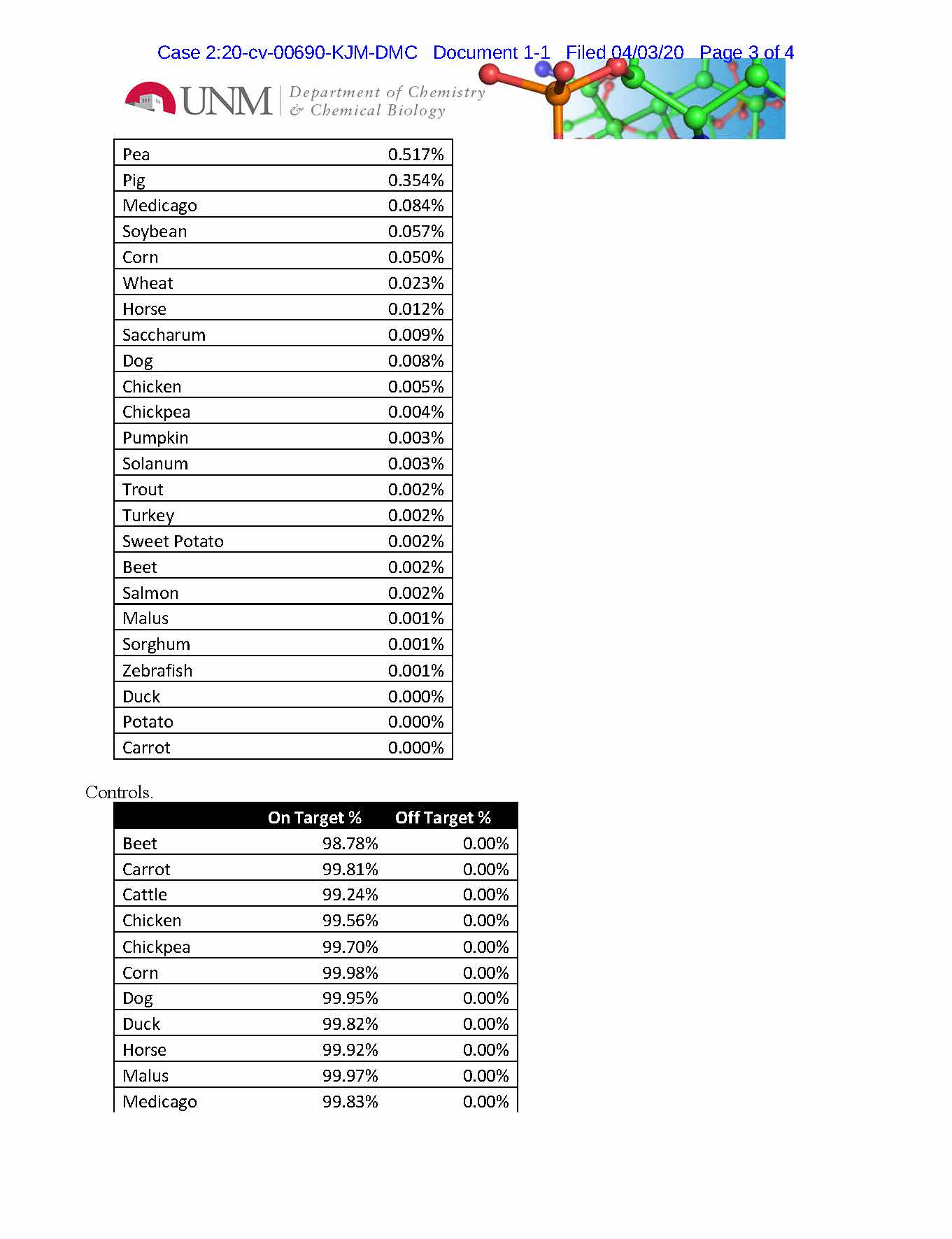
Yes, you read that correctly — aside from the lamb and rice, the product contained beef, deer, peas pork, and several grains. Horse and dog were also found in measurable amounts!!!! All told 25 measurable ingredients — a far cry from “Just 6.” and there are higher percentages of horse and dog than chicken, which the product is supposed to contain as chicken fat. This is so wrong, on so many levels.
So, back to why human quality is such an important criteria. True human quality foods are made in a licensed and inspect human food plant, some even under contious inspection by USDA. All ingredients coming into the facility are humn quality. The AAFCO standard can be found here, and the checklist here. All of the situations described above could have been avoided if pet food was held to the human standard. Pets would not be sickened or worse, recalls would be fewer, consumers would actually know what they’re buying. The only way to convince companies to produce this level of product is to ask for it and support the brands that are producing it. Honest Kitchen was the first company to make the human quality claim, back in 2007. You can find more verified human quality claims and related details in Truth About Pet Food’s Annual List, which verifies all claims made by brands, and breaks them down for you in an easy to compare manner.
Whatever you choose to feed, do your research. Ask tough questions. And walk away from products that are not transparent or just don’t feel right for you or your dog. Food is the foundation of health, and your best friend is counting on you.